Certificate in Law, Policy and Advocacy
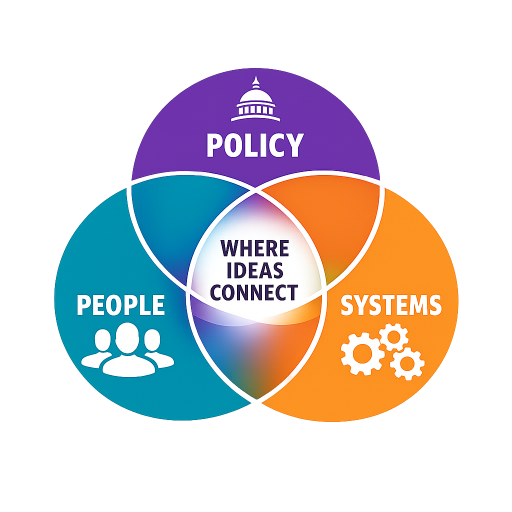
Whether you're interested in law school, public service, healthcare, business or social impact, the Law, Policy and Advocacy Certificate equips you with the skills to navigate complex systems and influence real-world decisions.
Students develop the analytical, research and communication skills necessary to engage effectively with legal, policy and nonprofit frameworks. Through interdisciplinary coursework, the certificate prepares students to evaluate complex legal issues, analyze policy decisions, and advocate for solutions in governmental, nonprofit and private-sector settings.
This certificate complements majors across the social sciences, humanities and professional programs. It is available to degree-seeking undergraduate students or as a standalone certificate for those looking to dabble or enhance their resume.
Why Law, Policy and Advocacy?
- Learn how decisions are made at local, state and national levels.
- Build skills in argumentation, research and communication.
- Understand how policy impacts real people and communities.
- Prepare for a career in law, healthcare, government, nonprofit work and more.
Program structure
18 credit hours: Students complete 12 hours of foundational courses—one from each category outlined below—and 6 hours of electives.
- Foundational Courses
- Legal Theory
- Justice and Equity
- Policy Development and Implementation
- Advocacy, Participation and Engagement
- Electives (6 hours)
Course Catalog page for the Law, Policy, and Advocacy Undergraduate Certificate
Declare the certificate
To declare this certificate, please fill out this Add/Drop Law, Policy, and Advocacy Certificate form (Qualtrics).
This certificate is ideal for students who:
- Are considering law school or graduate school
- Want to work in healthcare, public health, or human services
- Are interested in government, politics or nonprofit work
- Care about social issues and community impact
- Are interested in public policy, leadership and advocacy
- Want to be involved in journalism and political communication
- Have multiple interests and want to connect them
Pair this certificate with:
- Life sciences and health-related majors → health policy, bioethics healthcare systems and advocacy
- Social sciences (psychology, social work, political science, criminology, leadership, etc.) → public policy, criminal justice
- Humanities (languages, history, communication) → ethics, law, communication
- Business (management, ag communications, community development, etc.) → regulatory environments, policy impact
Career relevance
Those who complete this certificate gain practical skills in:
- Policy research and analysis
- Legal reasoning and argumentation
- Advocacy and stakeholder engagement
- Professional writing and policy communication.
These competencies are valuable in organizations that shape or respond to legal and policy decisions, including government agencies, nonprofits, think tanks, and policy research institutes.
This certificate is designed for students who don’t fit into just one box. Whether your interests span science, health, policy, or people—you’ll learn how to connect them into a meaningful career path.
Program learning outcomes
- Students will demonstrate knowledge of legal systems, political institutions, and social structures.
- Students will identify and explain conceptions of rights, justice, and law, and will apply critical perspectives from philosophy or social science to analyze the justice of distributions of rights and social power.
- Students will be able to demonstrate knowledge of the processes and practices involved in the development and implementation of public policy, and ability to critically evaluate policy outcomes, and analyze policy feedback loops.
- Students will apply advocacy skills—such as community organizing, legal reasoning, and policy analysis—to engage real-world justice issues, translating classroom learning into action.
- Students will develop a reflective practice that examines their own relationship to legal and political structures and fosters ethical, accountable, and inclusive approaches to justice work.
For more information, contact Dr. Kaela Urquhart at kaelaurquhart@k-state.edu.