Bridging Campus and Community: Arts and Sciences Engagement Symposium
Feb. 13, 2026 | 9 a.m.-8 p.m. | Hale Library and K-State Student Union
Join K-State faculty members, instructors and graduate students for a free, on-campus symposium designed to strengthen community-engaged teaching, research and creative work. Participants will gain practical strategies for expanding the impact of their work beyond the university and for incorporating applied learning experiences into their courses.
Highlights
- keynote-led workshop on curriculum and syllabus design
- panel with local community organizations
- presentations from faculty members who have led successful engagement projects
- networking with campus partners
- evening community-involved orchestral performance commissioned by Tallgrass Artist Residency.
The public is welcome. This come-and-go symposium is for anyone interested in building meaningful partnerships and enriching student learning through community engagement.
Event Schedule
Come and go as you please. All sessions will be in-person and not live-streamed. Unless otherwise noted, all sessions, including the Networking Coffee Hour, will be in 581 Hale Library.
- 9 a.m. – Check-in
- 9:30 a.m. – Keynote Speaker: Cynthia Lawson Jaramillo, Vice Provost for Research, Parsons School of Design at the New School
- 10:30 a.m. – Community Organizations Panel: Hear from key community leaders about integrating academic learning with local organizations
- 11:30 a.m. – Faculty Round Tables: Learn how K-State faculty members are productively engaging with diverse communities
- 12:30 p.m. – Lunch break (on your own)
- 1:30 p.m. – Curriculum Design Workshop: Led by Cynthia Lawson Jaramillo and Evren Uzer, Principal Investigator for Community Engagement 101 curricular research at the New School
- 3 p.m. – Networking Coffee Hour hosted by Chapman Center for Rural Studies
- 7 p.m. – Tallgrass Regenerative Orchestra performs "Eight Quilts for the School" composed by J. Clay Gonzalez for the Kansas-based Tallgrass Artist Residency and performed by students, K-State faculty members and Manhattan community members – K-State Student Union, Courtyard
Registration
Registration is free and helps us plan the symposium.
Featured Guests
Keynote Speaker
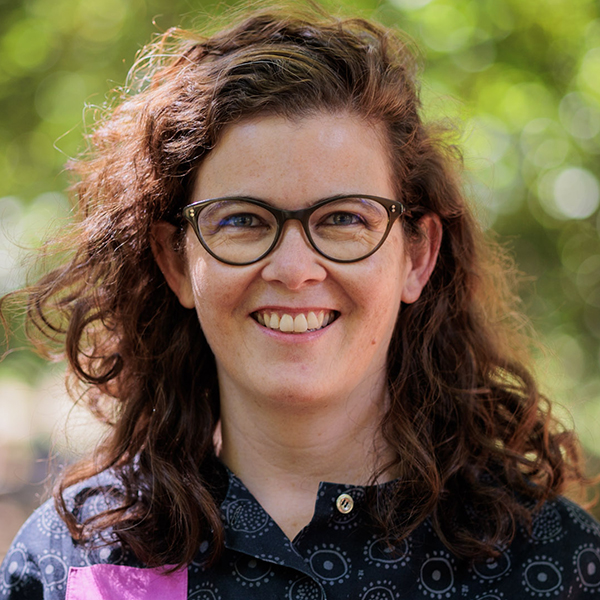 Cynthia Lawson Jaramillo, professor of integrated design at Parsons School of Design, The New School, is a practitioner and scholar of social design and design education and an internationally exhibited artist. Since joining The New School in 2003, she has held several leadership roles including as dean of the School of Design Strategies and associate provost for distributed and global education. She is associate editor of the Journal of Design Strategies and a member of the design education networks of AIGA, Future of Design in Higher Education, and DEL Conference, for which she serves on the committee. As a consultant, she has worked internationally with organizations such as CARE and the World Bank. A Fulbright scholar, her work on interdisciplinary design education, design and social impact, and the ethics of community engagement has appeared in several peer-reviewed journals including Visible Language and Dialectic, and as chapters in books including MIT Press and Routledge publications. The DEED Lab, which she co-founded in 2007 and currently directs, is known globally for its research on the artisan sector, especially critiquing the role that designers and entrepreneurs play in extracting money and value from craft communities.
Curriculum Design Facilitator
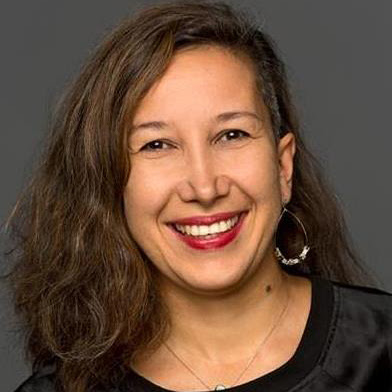 Evren Uzer, associate professor of strategic design and urban practice at Parsons School of Design, The New School, is a New York City-based educator, urban planner and community practitioner working on civic engagement in planning and design. Her current research focuses on activism, community engagement in collaborative processes, critical heritage and resistance studies, and feminist spatial practices. For education-focused partnerships and co-design projects, she regularly collaborates with NYC-based community organizations and public agencies. She is the principal investigator for the Community Engagement 101 curricular research project and the Foundations: Teaching and Learning Frameworks for Equitable Community Engagement course. Her practice is currently split between community engagement, planning and design work at the Collective for Community, Culture and Environment, an interdisciplinary collective of women and women identified individuals working on projects that further economic resilience, cultural diversity, public health, social justice and environmental sustainability, especially focused on engaging low- and moderate-income residents and communities to shape decisions about their environment and everyday life.
Tallgrass Regenerative Orchestra
 J. Clay Gonzalez, a composer, director and producer specializing in site-specific, large-scale musical works that engage communities in collaborative sound-making. Gonzalez wrote "Eight Quilts for the School," a participatory sonic immersion piece that takes its name from quilts by local Kansas artist Michelle Wolfe, as a commissioned work for the Tallgrass Artist Residency. Through these eight quilts, the work depicts ecological succession and the cycles of the seasons in the Flint Hills—from a springtime prairie fire all the way to the stars on a clear winter evening. The piece was inspired by Gonzalez's experiences in the Tallgrass Preserve and reflects the surreal expansiveness and otherworldly beauty of the local landscape. Drawing directly from the ecology in and around Manhattan, the work transforms elements of this place into an immersive sonic experience.
We are calling on K-State and Manhattan community members to help bring this piece to life! Performers of all backgrounds are welcome—beginners, hobbyists, amateur guitarists, computer musicians, folk musicians, professionals, informal singers, virtuosi, performers of all styles and genres. No experience is needed. Learn more and register to participate.
Community Panelists
- Stephen Bridenstine, Flint Hills Discovery Center
- Kendra Kuhlman, Manhattan Arts Center
- Daniel Skucius, Riley County Extension Director
- Kelly Yarbrough, Tallgrass Artist Residency
K-State Faculty Presenters
Dr. Brenes collaborates on Food as Medicine (FAM) community-engaged research initiative focused on strengthening Extension professionals’ capacity to implement evidence-based FAM programming. This project examines current knowledge, training preferences, and resource needs among Extension professionals across Kansas to ensure programming is practical and responsive to community realities.
Using a statewide needs-based approach, the project is unfolding in two phases. Phase one includes focus groups and in-depth interviews to assess Extension professionals’ awareness, experiences, and training needs related to Food as Medicine initiatives. Insights from this phase are informing phase two: the design and implementation of a targeted Food as Medicine training module and educational materials for Family and Consumer Science Extension Agents. The goal is to develop a sustainable, evidence-informed training model with real-world application.
As a faculty member with an Extension appointment, Dr. Brenes also plays a key collaborative role—partnering with faculty who may not have Extension or community-engaged research experience and supporting them in connecting research with Extension practice.
Those interested in similar projects may contact Dr. Brenes or her colleagues Dr. Paola Paez or Dr. Valentina Trinetta, both in K-State’s College of Health and Human Sciences.
Professor Payne’s project, Front Porch Chats, is a community conversation and writing series co-developed with Habitat for Humanity of the Northern Flint Hills. Through interactive dialogue and writing activities, neighbors come together to share ideas, dreams, and lived experiences using Habitat’s Neighborhood Revitalization Framework. Participants explore seven key community sectors—amenities, economic opportunities, education, health, housing, safety and transportation—while celebrating neighborhood strengths and envisioning future possibilities.
Each conversation contributes to an interactive StoryMap that captures the joy, creativity, and assets of downtown Manhattan, Kan., neighborhoods, highlighting what makes them meaningful places to live.
For those interested in similar work, Payne suggests contacting a local organization that might want to be a collaborator. “Developing a community-engaged research project with a local organization is an important step toward aligning your research focus with your community partner’s interests.”
Explore the Front Porch Conversation StoryMaps.Dr. Padilla Carroll leads the Engaged Stories Lab, a community-engaged initiative that harnesses the power of accessible, public-facing scholarship to connect students with communities across Kansas. Through multimedia storytelling—including documentaries, photo essays, and longform digital narratives—the lab translates research into dialogue and action. These projects illuminate pressing social issues such as health disparities, food insecurity, and racial inequality, while amplifying community voices and producing scholarship that can inform public understanding and policymaking.
By centering collaboration, storytelling, and civic impact, the Engaged Stories Lab models how engaged scholarship can bridge campus and community in meaningful, mutually beneficial ways.
Padilla Carroll and team are always looking for faculty collaborators and student interns to develop documentaries, photo essays and longform public-facing scholarship.
Learn more about the Engaged Stories Lab.Dr. Melander teaches a Women and Crime course. In it, students move beyond the scholarly literature to engage directly with individuals currently experiencing the criminal justice system. Through a sustained collaboration with the Topeka Correctional Facility, students exchange weekly letters with a facility resident, learning about life both within and beyond the prison walls. The project emphasizes maintaining professional boundaries while building rapport, strengthening written communication skills, and deepening students’ understanding of criminology in lived contexts.
When possible, pen pals may meet at the end of the semester—either in person or virtually. Ongoing group and individual reflection is central to the project, enhancing student learning and sparking curiosity about a wide range of criminology topics, including gender, justice, and incarceration.
Dr. Auckly loves to share math with people at all levels. For his outstanding commitment to education and leadership, Auckly was named a University Distinguished Professor, the highest academic title awarded by K-State. Auckly is known for his research in geometric topology, mathematical physics and control theory as well as his continuous work in mathematics outreach and education.
Auckly is co-founder and director of the Navajo Nation Math Circles project, which has provided mathematics enrichment and professional development for teachers and students in the Diné community since 2012. The project was featured in the PBS-aired documentary "Navajo Math Circles" and has received national attention for its approach to STEM education.
Want more information?
Contact Syneva Colle Hernández at scolle@k-state.edu.